
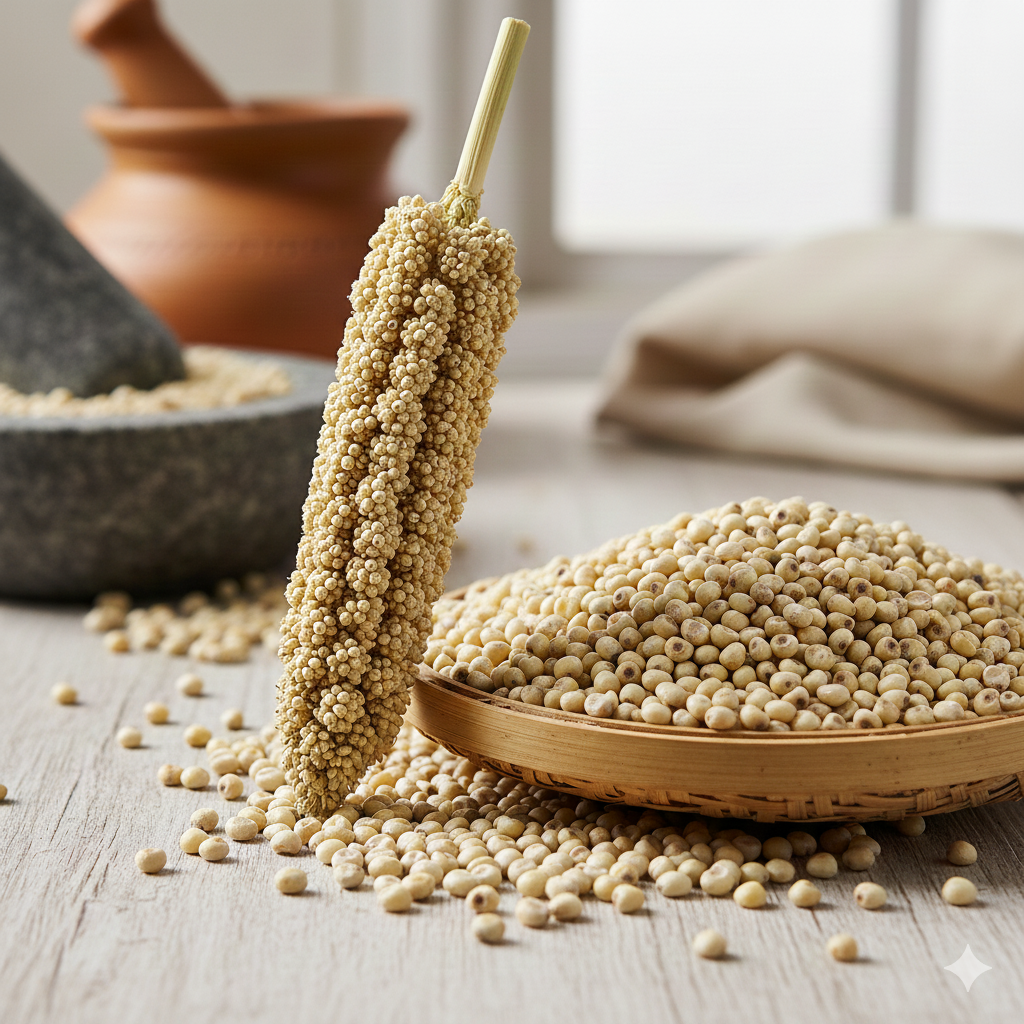
If you’ve grown up in India, you’ve definitely heard someone say that Pearl Millet (Bajra) keeps you full for long and gives you strong energy. And honestly, it’s true. Pearl Millet (Bajra), which we call bajra, is one of those grains that our grandparents trusted, but we somehow forgot because of modern food trends.
Let’s keep things simple and talk about what bajra really is, why it’s healthy, and how you can use it in everyday meals without overthinking.
What is Pearl Millet (Bajra)?
Bajra is a type of Pearl Millet (Bajra) that grows easily in hot, dry areas. That’s why it has been a staple food in villages for centuries. It’s naturally gluten-free, rich in fibre, and packed with minerals. In simple words, bajra is a grain that gives slow, steady energy and keeps your stomach full for a long time.
People usually use bajra to make rotis, porridge, khichdi, or upma. It has a slightly nutty taste and makes food feel more satisfying.
Bajra Compared to Other Grains
You might wonder why people call bajra healthier than wheat or rice. Here’s the simple reason:
Pearl Millet (Bajra has more fibre than wheat and rice.
It keeps you full for longer, so you don’t feel like snacking.
It digests slowly, which means it’s good for people who want stable energy through the day.
It’s naturally gluten-free, so people avoiding gluten can eat it.
Basically, bajra gives you more nutrients per bite compared to regular polished grains.
Nutrition Profile of Bajra (Easy Explanation)
Instead of confusing numbers, here’s what matters:
-
It has good fibre for digestion.
-
It contains protein that helps body strength.
-
It has minerals like iron, magnesium, and phosphorus that support blood, bones, and energy levels.
-
It has complex carbs that give steady energy without sugar spikes.
Pearl Millet (Bajra) is honestly one of the most balanced grains you can add to your meals.
Health Benefits of Bajra
Let’s break it down in everyday language.
Helps Digestion
Because it has a lot of fibre, bajra helps keep your stomach clean and prevents constipation. It’s great for people who want better gut health.
Good for Weight Management
Since bajra keeps you full for longer, you naturally eat less junk. It helps control cravings without making you feel hungry all the time.
Supports Blood Sugar Control
Bajra digests slowly, which means it doesn’t shoot up your blood sugar suddenly. Many nutritionists recommend it for people who want stable sugar levels.
Rich in Important Nutrients
Bajra gives minerals that support strong bones, better energy, and improved immunity. It’s a strong grain for everyday health.
Different Ways to Use Bajra
pearl millet (Bajra) comes in different forms, and each one has its own use.
Whole bajra grain: used for khichdi or boiling like rice.
Bajra flour: used for rotis, laddoos, or mixed with other flours.
Bajra rava: perfect for making upma or porridge.
You don’t need to follow complicated recipes. Once you know the basics, it’s easy to add bajra to your meals.
How to Cook Bajra (Simple Basics)
Cooking Whole Bajra
Soak it for a few hours, then pressure cook it like you cook rice. You can mix it with dal and veggies to make khichdi.
Making Bajra Rotis
Take bajra flour, add hot water, and make a soft dough. Pat the rotis slowly with your palm. They taste best when eaten fresh with ghee.
Bajra Breakfast Ideas
You can make bajra upma, porridge, or mix a little bajra flour into your regular paratha dough for extra nutrition.
Who Should Be Cautious
Bajra is very healthy, but overeating it can feel heavy for some people, especially those not used to high-fibre grains. Start with small amounts and listen to your body.
Bajra Myths vs Facts
Myth: Bajra is only a winter food.
Fact: You can eat it all year, just control portion size in summer.Myth: Bajra makes you feel bloated.
Fact: Only if you overeat or don’t drink enough water. Fibre needs water
Frequently Asked Questions (Simple Answers)
Is bajra and pearl millet the same?
Can I eat bajra daily?
Is bajra good for diabetes?
How do I store bajra?
Final Thoughts
Bajra is not fancy or modern, but it’s genuinely one of the most powerful grains you can add to your diet. It keeps you full, supports your energy, and gives your body real nourishment. Whether you eat it as a roti, khichdi, or porridge, it’s a smart choice for everyday health.