
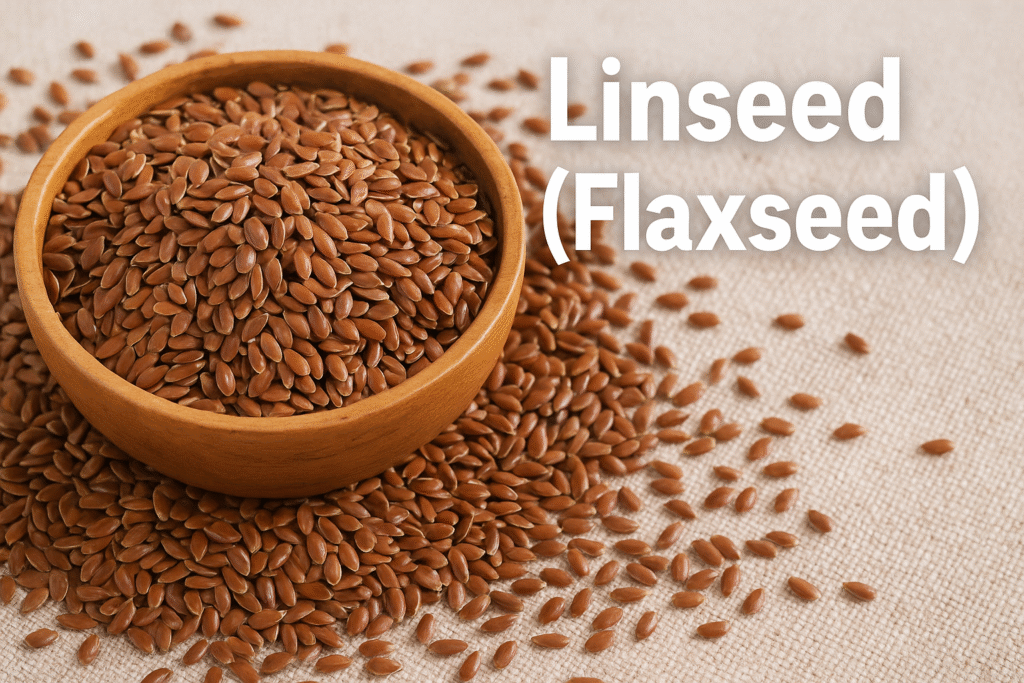
Linseed Seed Ever heard of linseed? Maybe you know it as flaxseed. Same thing!
It’s a tiny seed, but honestly, it’s a powerhouse for your health. People add it to smoothies, oats, cookies, breads — and even use it to improve digestion and heart health.
So let’s break it down in the easiest way possible.
What is Linseed (Flaxseed)? – Origins & Meaning
Linseed Seed comes from a plant called flax. This plant has been around for thousands of years — earlier people used it to make clothes, ropes, and even oil.
Today, the seed of this plant (linseed) is famous because it’s super healthy and easy to add to everyday food.
Linseed seed vs Flaxseed: Are They the Same?
Short answer? YES. Exactly the same.
Some people call it linseed (more in India/UK), and some call it flaxseed (common in the US).
But don’t get confused — it’s one seed with two names.
Nutritional Profile of Linseed (In Simple Words)
Let’s keep it real simple. Linseed is rich in:
Healthy fats (especially Omega-3s)
Fiber (keeps digestion smooth)
Plant protein
Lignans (powerful antioxidants)
Basically: tiny seed, big benefits.
Major Health Benefits of Linseed Seed
Here’s why people love it:
1. Packed with Omega-3 (Heart-Friendly Fat)
2. Super High in Fiber
3. Rich in Antioxidants (Lignans)
4. Supports Cholesterol & Heart Health
How to Consume Linseed: Whole, Ground, Oil? (What’s Best?)
Whole Seed
You can eat whole linseed, but your body can’t absorb everything.
It mostly passes through your system without giving all the benefits.
Ground Linseed (Best Choice!)
Ground linseed is easy to digest, and your body absorbs all the nutrients.
Most nutritionists recommend this form.
Linseed Oil
Good for salads, dips, and dressings.
But don’t heat it too much — it burns quickly and loses nutrients.
Recipe Ideas – How to Add Linseed to Your Food
Want to actually use it? Try these easy ideas:
Breakfast Ideas
Sprinkle 1 tbsp ground linseed on your oats
Add to your smoothie
Mix into curd/dahi with fruits
Baking Ideas
Add to muffins and cookies
Mix into homemade granola
Add to chilla/dosa batter
Savory Ideas
Add to salads
Sprinkle on sabzi
Mix into roti dough
Just 1–2 spoons a day is enough to see benefits.
How Much Linseed Should You Eat Per Day?
About 1–2 tablespoons per day is the sweet spot.
More than that can cause bloating or discomfort.
.
Potential Risks & Myths About Linseed
Let’s clear the confusion:
Myth: Eating linseed raw is dangerous.
Truth: Raw is fine — just keep it ground.Myth: More linseed = more benefits.
Truth: Nope. Too much fiber can upset your stomach.Myth: Linseed oil is good for frying.
Truth: It burns easily. Use it cold only.